

Uncategorized
A Miniature Circuit Breaker (MCB) is one of the most commonly used protective devices in electrical systems. Whether in residential, commercial, or light industrial applications, MCBs play a critical role in ensuring electrical safety.
But how does an MCB actually work?
Understanding its internal mechanism helps users choose the right product and use it more effectively.
What Is an MCB?
An MCB (Miniature Circuit Breaker) is an automatic electrical switch designed to protect circuits from damage caused by overload and short circuit conditions. Learn More
Unlike traditional fuses, which must be replaced after operation, MCBs can be reset and reused, making them more convenient and reliable.
Basic Working Principle of an MCB
The working principle of an MCB is based on two key protection mechanisms:
1. Thermal Protection (Overload Protection)
When a circuit experiences a sustained overload, the current exceeds the rated value for a period of time.
Inside the MCB, a bimetallic strip heats up as current flows through it. When the temperature rises beyond a certain point, the strip bends and triggers the trip mechanism, disconnecting the circuit.
✔ This process is slightly delayed. The common B, C, and D delay characteristics are utilized in different application fields. This allows temporary surges (like appliance startup) without unnecessary tripping.

2. Magnetic Protection (Short Circuit Protection)
In the case of a short circuit, the current rises suddenly and sharply.
The MCB contains an electromagnetic coil that reacts instantly to this high current. The magnetic force pulls a trip lever, causing the breaker to disconnect the circuit immediately.
✔ This ensures rapid protection and prevents serious damage to equipment or wiring.
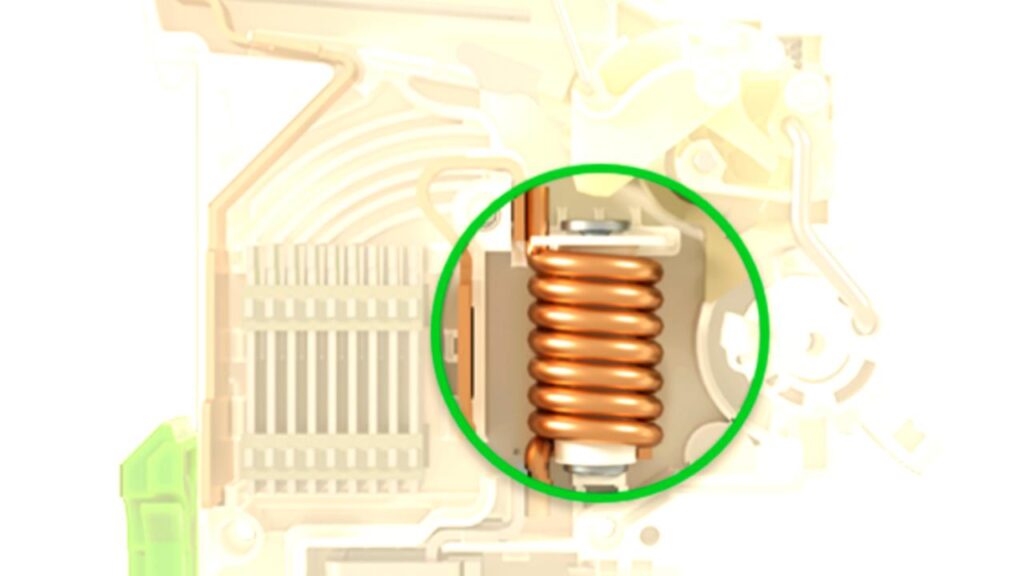
Key Components Inside an MCB
To better understand how an MCB works, it helps to know its main internal components:
- Bimetallic Strip – Responsible for overload protection
- Electromagnetic Coil – Provides short circuit protection
- Trip Mechanism – Releases the switch when a fault is detected
- Arc Chute – Extinguishes the electric arc formed during disconnection
- Contacts – Open and close the circuit
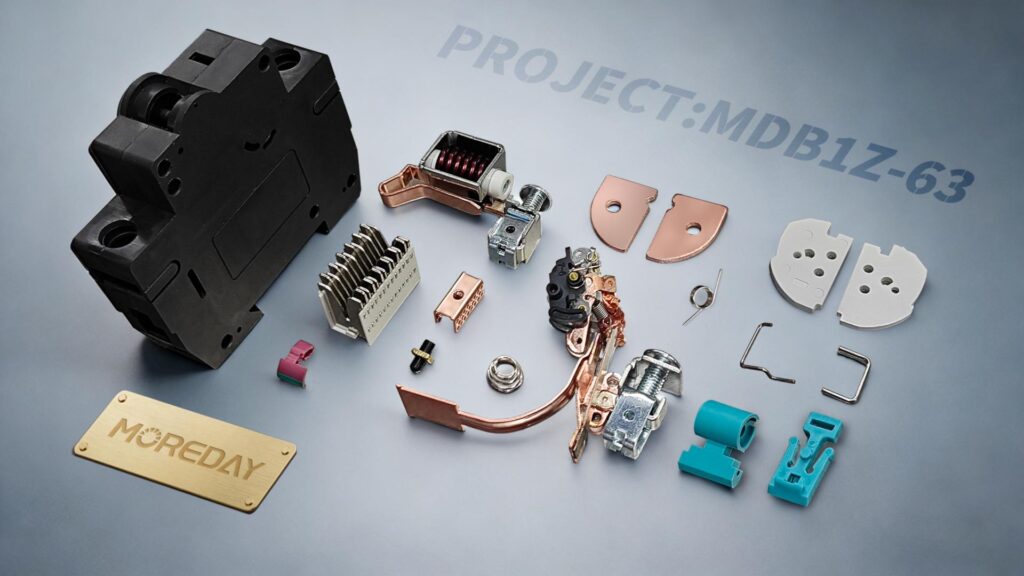
Each component works together to ensure safe and reliable circuit interruption.
What Happens When an MCB Trips?
When a fault occurs, the MCB follows a sequence of actions:
- The fault current is detected (overload or short circuit)
- The thermal or magnetic mechanism is activated
- The trip mechanism releases the contacts
- The circuit is interrupted
- The arc is extinguished safely inside the breaker
Once the issue is resolved, the MCB can be manually reset.
Why MCBs Are Important
MCBs are essential for modern electrical systems because they provide:
Safety Protection
They prevent overheating, fire hazards, and electrical damage.
Convenience
Unlike fuses, they do not need replacement after operation.
Reliability
They respond quickly and accurately to electrical faults.
Cost Efficiency
Reusable design reduces maintenance and replacement costs.
MCB vs Fuse: What’s the Difference?
While both devices protect electrical circuits, there are key differences:
- MCB: Resettable, faster response, more precise protection
- Fuse: Single-use, must be replaced after blowing
Today, MCBs are widely preferred due to their convenience and improved safety features.
Choosing the Right MCB
When selecting an MCB, consider the following factors:
- Rated current (e.g., 6A, 16A, 32A)
- Tripping curve (B, C, or D type)
- Application (residential, commercial, industrial)
- Voltage rating
Choosing the correct MCB ensures both safety and optimal system performance.
Conclusion
Understanding how an MCB works helps you make better decisions when designing or upgrading an electrical system. By combining thermal and magnetic protection mechanisms, MCBs provide reliable and efficient circuit protection.
If you are looking for high-quality circuit protection solutions, explore our full range of MCB products designed for various applications.
👉 View our MCB product range to find the right solution for your needs.