
DistributionSolar
Introduction
C
ircuit protection plays a crucial role in safeguarding electronic devices from damage. Fuse holders ensure safety by securely holding fuses, which protect circuits from over-current situations. MOREDAY offers a range of high-quality fuse holders designed to meet stringent standards and provide reliable protection. These products cater to various application needs, ensuring optimal performance and safety.
Types of Fuse Holders
Open Fuse Holders
Open fuse holders provide easy access to the fuse holder and facilitate quick replacement. These types are commonly used in applications where frequent fuse changes are necessary.
Fuse Clips
Fuse clips offer a simple and cost-effective solution for holding fuses. Manufacturers design these clips to securely hold cylindrical fuses in place. The clips ensure a reliable electrical connection while allowing easy removal and replacement of the fuse.
Fuse Blocks
Fuse blocks provide a more structured approach to mounting fuses. These blocks can hold multiple fuses in an organized manner. Each fuse has its own designated slot within the block. This design enhances safety and simplifies maintenance by clearly indicating the position of each fuse.
Fully Enclosed Fuse Holders
Fully enclosed fuse holders offer additional protection by completely encasing the fuse. This design reduces the risk of accidental contact with live components, enhancing overall safety.
Sockets
Sockets serve as a common type of fully enclosed fuse holder. These sockets house the fuse within a protective casing. The design ensures that the fuse remains secure and isolated from external elements. Sockets are often used in environments where dust, moisture, or other contaminants pose a risk.
Plug-on Caps
Plug-on caps provide another method for enclosing fuses. These caps fit over the fuse and the fuse holder, creating a sealed environment. Plug-on caps are particularly useful in applications requiring a high degree of protection against environmental factors.
Fully Enclosed Holders
Fully enclosed holders represent the most comprehensive form of fuse protection. These holders completely encase the fuse and the fuse holder assembly. The design prevents any direct contact with the fuse, ensuring maximum safety. Fully enclosed holders are ideal for high-risk environments where safety is paramount.
MOREDAY's Specific Designs
PCB Fuse Clips
Features
MOREDAY’s PCB Fuse Clips offer a cost-efficient solution for mounting fuses on printed circuit boards. These clips securely hold cylindrical fuses in place, ensuring a reliable electrical connection. The design includes a “stop” feature to help position the fuse accurately during insertion. Made from high-quality materials, these clips resist wear and tear effectively.
Benefits
Using MOREDAY’s PCB Fuse Clips enhances the longevity and performance of electrical systems. The superior materials used in these clips provide higher tolerance to varying voltage levels, ensuring consistent performance. The clips’ design aids in dissipating heat effectively, further enhancing system safety. These features make them an attractive alternative to other mounting options.
Applications
MOREDAY’s PCB Fuse Clips are suitable for a wide range of applications. They are ideal for use in electronic devices where space is limited and cost-efficiency is crucial. These clips are commonly used in consumer electronics, industrial equipment, and automotive circuits.
PCB Fuse Holders
Features
MOREDAY’s PCB Fuse Holders provide a secure and robust current path for fuses mounted on printed circuit boards. These holders are designed to accommodate both North American and international-sized fuses. The holders ensure a reliable connection and easy replacement of fuses when needed.
Benefits
The use of MOREDAY’s PCB Fuse Holders improves the overall efficiency and safety of electrical systems. The high-quality materials and innovative design reduce the frequency of maintenance and replacements. These holders also prevent loose connections and overheating, minimizing potential electrical hazards.
Applications
MOREDAY’s PCB Fuse Holders are versatile and can be used in various applications. They are suitable for consumer electronics, telecommunications equipment, and industrial control systems. These holders are particularly useful in environments where reliability and safety are paramount.
Panel Mount Fuse Holders
Features
MOREDAY’s Panel Mount Fuse Holders are designed for easy installation and secure mounting on panels. These holders provide a robust and reliable connection for fuses, ensuring optimal performance. The design includes features that facilitate quick and easy fuse replacement.
Benefits
MOREDAY’s Panel Mount Fuse Holders enhance the safety and longevity of electrical systems. The high-quality materials used in these holders resist wear and tear, providing long-term durability. The design also helps in dissipating heat, reducing the risk of overheating and electrical faults.
Applications
MOREDAY’s Panel Mount Fuse Holders are ideal for use in a variety of applications. They are commonly used in industrial machinery, power distribution units, and electrical panels. These holders are suitable for environments where easy access and quick fuse replacement are essential.
In-line Fuse Holders
Features
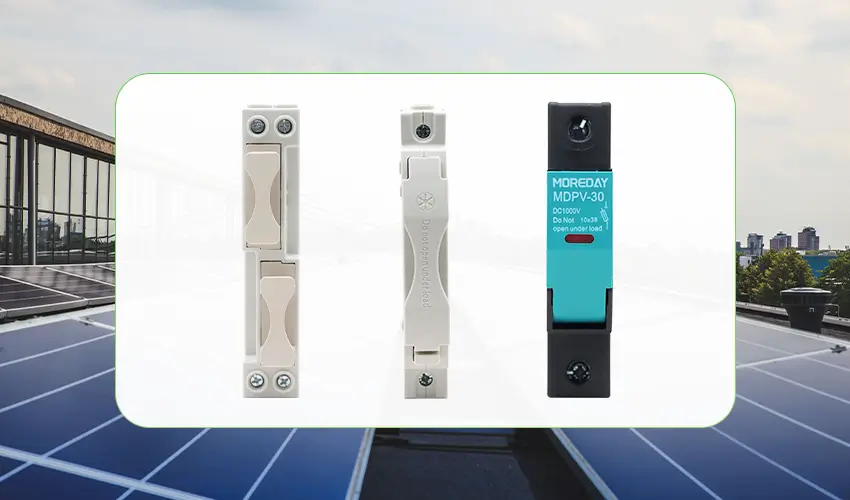
MOREDAY’s In-line Fuse Holders provide a versatile solution for circuit protection. These holders feature a self-contained wire harness, allowing for easy integration into various electrical systems. The design ensures a secure connection between the fuse holder and the fuse, preventing voltage bleed and enhancing overall safety. High-quality materials used in these holders offer excellent resistance to wear and tear, ensuring long-term durability. Additionally, the holders are designed to accommodate both North American and international-sized fuses, providing flexibility for different applications.
Benefits
Using MOREDAY’s In-line Fuse Holders significantly enhances the safety and efficiency of electrical systems. The robust design ensures a reliable current path, reducing the risk of loose connections and overheating. The high-quality materials used in these holders contribute to consistent performance and reduced maintenance frequency. The innovative design aids in effective heat dissipation, further minimizing potential electrical hazards. These benefits make MOREDAY’s In-line Fuse Holders a cost-effective choice for various applications.
Applications
MOREDAY’s In-line Fuse Holders are suitable for a wide range of applications. These holders are ideal for use in automotive circuits, consumer electronics, and industrial equipment. The versatility of the design allows for easy replacement of fuses, making them suitable for environments where quick maintenance is essential. The holders’ ability to provide a secure and reliable connection makes them an excellent choice for high-risk environments where safety is paramount.
Conclusion
MOREDAY provides strong customer support to assist users with installation, troubleshooting, and maintenance. The availability of detailed user manuals and responsive customer service ensures a positive user experience. This support adds value to the product, making MOREDAY’s Fuse Holders a reliable choice for circuit protection.
In conclusion, MOREDAY’s Fuse Holders offer a combination of quality, safety, and cost-effectiveness. These advantages make them an excellent choice for ensuring reliable circuit protection in various applications.
MOREDAY’s Fuse Holders offer unparalleled advantages in circuit protection. The superior quality and reliability ensure long-term performance. Enhanced safety features reduce electrical hazards. Easy installation and maintenance save time and effort. Cost-effective pricing makes these fuse holders accessible to a wide range of users. Versatile applications cater to various sectors, from consumer electronics to industrial equipment.
Why is important?
"Choosing a high-quality fuse holder is not just an indulgence, but a requirement that can save a device, a system, or even a life."
SHINING E&E INDUSTRIAL CO., LTD
For more information, contact MOREDAY today. Empower your electrical systems with MOREDAY’s innovative solutions.