Solar
A solar power optimizer is a small electronic device installed on — or built into — each solar panel that dramatically improves how much electricity your system produces, especially when shading, panel mismatch, or complex roof layouts would otherwise drag down your whole array. But that’s only part of what a solar power optimizer does. It also plays a critical role in system safety through built-in rapid shutdown capability — a requirement now mandated by electrical codes across the US, Canada, and a growing number of countries worldwide.
This guide covers everything you need to know about solar power optimizers: how they work, what real-world performance gains they deliver, how they compare to microinverters and standard string inverters, and how to decide whether your installation needs them.
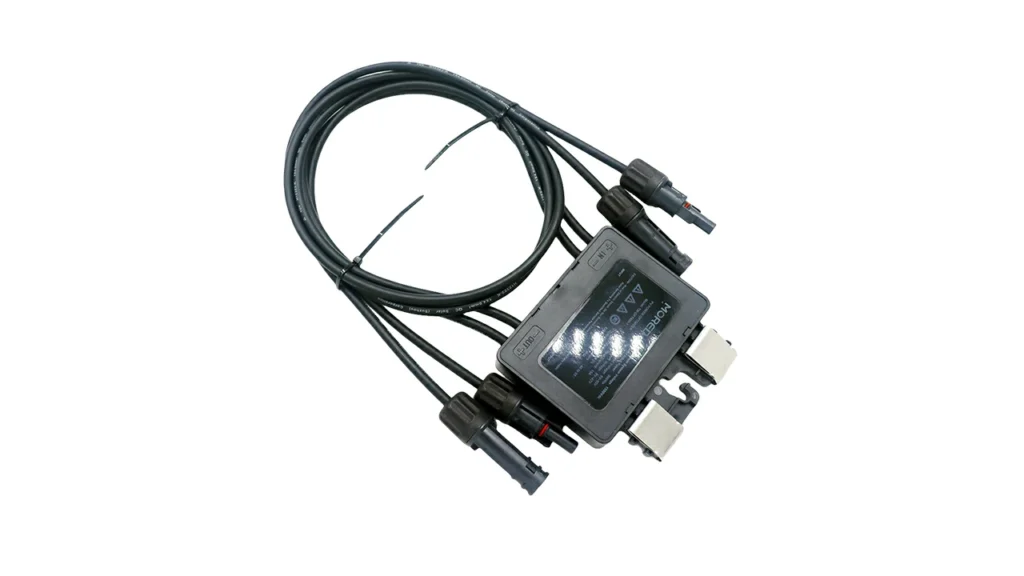
What Is a Solar Power Optimizer?
A solar power optimizer — also called a DC power optimizer or PV optimizer — is a module-level power electronics (MLPE) device that attaches to the back of each individual solar panel. Its job is to continuously monitor that panel’s output and adjust its voltage and current in real time to ensure it always operates at its Maximum Power Point (MPP) — the specific combination of voltage and current at which it generates the most electricity possible.
Unlike a microinverter, a solar power optimizer does not convert DC electricity to AC at the panel. Instead, it conditions and optimizes the DC output from that panel before sending it down the string to a central string inverter, which handles the DC-to-AC conversion for the whole system.
Think of a solar power optimizer as a smart voltage regulator for each individual panel — one that prevents a single underperforming panel from dragging down the output of every other panel in the string.
The Problem a Solar Power Optimizer Solves
To understand why solar power optimizers matter, you first need to understand the fundamental weakness of a traditional string inverter system.
The Christmas Light Effect
In a standard string inverter system, all solar panels in a string are connected in series — meaning the current through the entire string is limited by the weakest panel. If one panel is partially shaded by a tree, chimney, or bird droppings, it produces less current. Because all panels must operate at the same current in a series string, every other panel in that string is forced to match the output of the shaded panel.
This is sometimes called the Christmas light effect — just as one broken bulb in a series string can dim or extinguish the whole strand, one underperforming solar panel can reduce the output of the entire string.
The scale of this problem is significant: partial shading can reduce a string’s total output by 10–25% annually in locations with moderate obstructions — far more than the shading itself would suggest, because of the series-current constraint.
The Hot Spot Problem
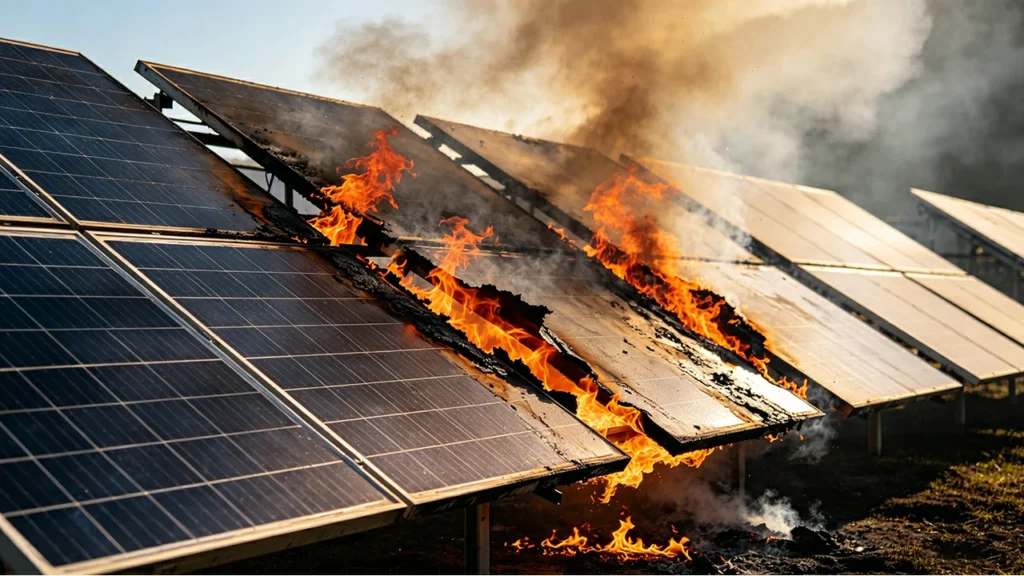
There is also a safety dimension to this issue. When a shaded cell is forced to carry the current of the whole string, it can begin to consume power rather than generate it. The affected cells experience a local temperature rise — this is known as the hot spot effect — and in extreme cases, panel temperatures can reach levels that cause permanent cell damage, delamination, or in rare but documented cases, fire.
Solar power optimizers eliminate both problems at the panel level by decoupling each panel’s output from the string, so a shaded or degraded panel never constrains the others — and can never become a hot spot that threatens the rest of the system.
How a Solar Power Optimizer Works
A solar power optimizer is fundamentally a DC-to-DC converter with intelligent control. Here is what happens at each panel:
Step 1: Continuous Output Monitoring
The optimizer’s onboard electronics continuously sample the panel’s voltage and current output — multiple times per second. This gives it real-time visibility into exactly how much power the panel is producing and where its current Maximum Power Point is.
Step 2: Individual MPPT Tracking
Maximum Power Point Tracking (MPPT) is the process of finding and staying at the voltage-current combination where the panel produces the most power. In a traditional string inverter, MPPT is performed at the string level — one MPPT controller for the whole string, which is a compromise between all the panels.
A solar power optimizer performs MPPT independently at each panel. This means each panel operates at its own optimal point, completely independently of its neighbors. A shaded panel operates at its (lower) MPP; the panels around it operate at their (full) MPP — with no cross-contamination of performance.
Step 3: Voltage Conditioning for the Inverter
After extracting maximum power from the panel, the optimizer adjusts the panel’s output voltage to a fixed value suitable for the string inverter. This voltage conditioning serves two purposes:
- It allows the string inverter to receive a consistent, predictable voltage from each panel regardless of shading or temperature variation.
- It enables the optimizer to reduce the panel voltage to a safe level during a rapid shutdown event — a critical safety function covered in detail below.
Step 4: Real-Time Data Reporting
Most solar power optimizers communicate panel-level performance data to a cloud platform via the string inverter or a gateway device. This enables panel-by-panel monitoring: you can see exactly how much power each individual panel is producing at any moment, identify panels that are underperforming, and diagnose issues before they become significant.
This level of visibility is not possible with a standard string inverter alone — which only reports aggregate string performance.
| 💡 Solar power optimizers can detect performance degradation in individual panels years before it would become apparent at the system level. Early detection of connector corrosion, partial cell failure, or mounting issues can prevent both energy losses and safety risks. |
Rapid Shutdown: The Built-In Safety Function
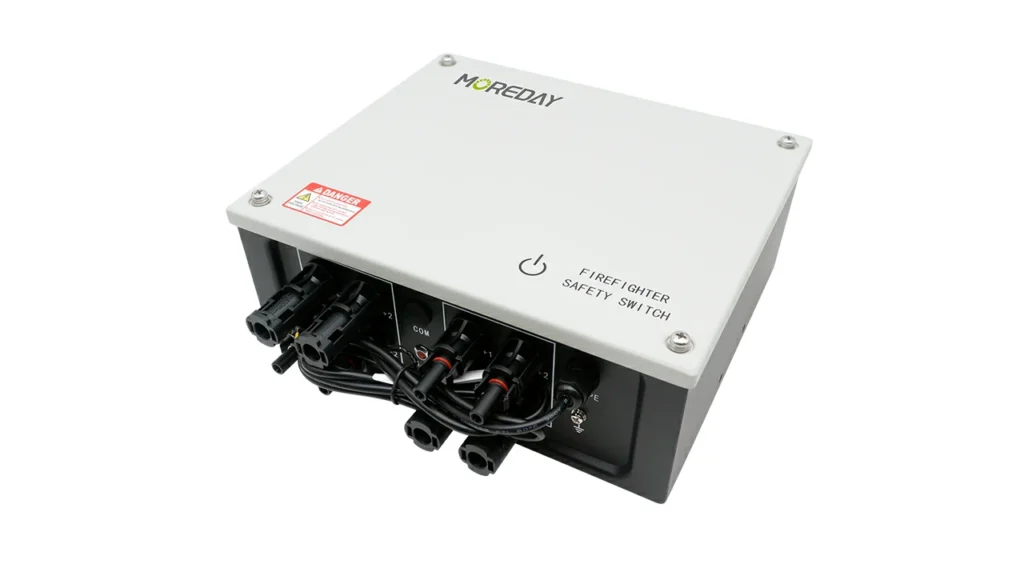
One of the most important — and legally significant — functions of a solar power optimizer is rapid shutdown capability. This is not a marketing feature. In many countries, it is a mandatory legal requirement for rooftop solar installations.
Why Rapid Shutdown Exists
Solar panels generate electricity whenever sunlight hits them. Unlike a gas appliance, you cannot simply turn off a solar panel — even if the inverter is switched off, the DC conductors between the panels and the inverter remain energized at whatever voltage the panels are producing. On a standard residential string system, this can be 300V to 600V DC or higher.
For firefighters responding to a house fire, this creates a serious hazard. High-voltage DC conductors on a roof cannot be de-energized by cutting utility power — the panels continue producing electricity independently of the grid. Without a rapid shutdown mechanism, first responders face the risk of electrical shock from energized conductors during firefighting and rescue operations.
What NEC 690.12 Requires
In the United States, National Electrical Code Article 690.12 — first introduced in 2014 and significantly expanded in 2017 and 2020 — mandates that rooftop PV systems installed on buildings must be capable of rapidly reducing conductor voltages to safe levels upon initiation of shutdown.
The current requirements under NEC 2020/2023 are:
- Outside the array boundary (conductors running from panels to inverter): voltage must drop below 30V within 30 seconds of shutdown initiation.
- Inside the array boundary (conductors between panels): voltage must drop below 80V within 30 seconds, OR the system must use a listed PV Hazard Control System (PVHCS) to UL 3741.
| Jurisdiction | Standard / Code | Key Requirement |
| United States | NEC 690.12 (2017/2020/2023) | < 30V outside array, < 80V inside array within 30 seconds |
| Canada | Canadian Electrical Code 2021, Section 64-218 | Rapid shutdown exception conditions for PV systems |
| Germany | VDE-AR-E 2100-712 | Specific fire protection — firefighter safety disconnect |
| Italy | CEI 82-25 V2:2012 | Safety requirements for PV system design and operation |
| Australia/NZ | AS/NZS 5033:2014 | Disconnection means near power source required |
| Poland | National PV Regulation | Systems > 6.5 kW must include DC rapid shutdown device |
| China | CTS 13001-2018 | Rapid shutdown required when DC voltage > 120V |
| Thailand | Thailand Electrical Code 2022 | Solar rooftop rapid shutdown requirements |
How Solar Power Optimizers Achieve Rapid Shutdown
A solar power optimizer meets NEC 690.12 requirements through a specific communication protocol with the inverter. When the rapid shutdown initiating device (typically the main AC disconnect) is opened:
- The inverter detects loss of AC power and sends a shutdown signal to all connected optimizers — typically via power line communication (PLC) through the DC wiring.
- Each solar power optimizer reduces its output voltage to a safe level — commonly to 1V DC or less — within the 30-second window specified by the code.
- The entire DC system — panels, combiner wiring, and inverter input — is de-energized to safe voltage levels, even in full sunlight.
| ⚠ The optimizer and inverter must be tested and certified together as a complete rapid shutdown system. Mixing optimizer brands with incompatible inverters can break the system certification and result in code non-compliance — something that will be flagged at permit inspection. |
Benefits of Solar Power Optimizers: What the Data Shows
Energy Yield Improvement
The performance gain from a solar power optimizer depends heavily on the site conditions. Industry data and independent testing show:
- Minimal or no shading: 1–3% improvement over a string inverter — marginal, but consistent due to better individual panel MPPT tracking.
- Moderate partial shading (chimney, vent pipe, occasional tree shadow): 10–25% improvement in affected string output.
- Significant or variable shading: 25–40% improvement in annual energy harvest compared to an unoptimized string system.
- Module mismatch (mixed panel ages, slight orientation differences): 3–8% improvement from individual MPPT tracking.
A 2025 independent study by VDE Renewables found that panel-level optimization delivers up to 10.5% more energy on complex residential roofs compared to unoptimized string inverter systems — validating the real-world value of optimizer technology beyond shading scenarios.
Panel-Level Monitoring
Solar power optimizers enable granular visibility into system performance that is simply not available from a string inverter alone. With optimizer-based monitoring, you can:
- See the real-time power output of every individual panel in your system
- Identify a single underperforming panel before it affects your electricity bill
- Diagnose whether an issue is caused by shading, dirt, connection degradation, or cell failure
- Track panel degradation over time and benchmark against expected performance
For homeowners, this translates to a meaningful reduction in the time between a problem occurring and it being diagnosed and resolved. For installers and O&M teams, it eliminates the need for manual I-V curve tracing to locate underperforming panels.
Design Flexibility
A solar power optimizer decouples each panel’s output from the string’s performance, which has significant implications for system design:
- Multiple roof orientations: Panels facing east, south, and west can be combined in the same string — normally this creates severe mismatch losses in a standard string system.
- Mixed panel types: Different panel models or sizes can be combined in one string without the lowest-spec panel dragging down the rest.
- Uneven string lengths: Strings of different lengths can be used in the same system, giving installers more flexibility in fitting panels to available roof space.
Safety Beyond Rapid Shutdown
Solar power optimizers contribute to system safety in ways beyond code-mandated rapid shutdown:
- Hot spot prevention: Because no panel is forced to carry more current than it can handle, the conditions that lead to hot spot formation are eliminated at the panel level.
- Arc fault mitigation: The optimizer’s continuous monitoring can detect abnormal electrical signatures consistent with arc faults — a leading cause of PV-related fires — and initiate protective action.
- Reduced DC conductor voltage at idle: SolarEdge optimizers, for example, reduce string voltage to 1V during standby, minimizing shock hazard for installers and maintenance personnel.
Solar Power Optimizer vs Microinverter vs String Inverter
Choosing between these three solar system architectures is one of the most common questions homeowners face. Here is an honest, data-driven comparison.
| Feature | String Inverter (no optimizer) | String Inverter + Optimizer | Microinverter |
| How it works | Single MPPT for whole string | Panel-level MPPT, central AC conversion | Full DC-AC conversion at each panel |
| Shading tolerance | Poor — one shaded panel drags down string | Excellent — each panel independent | Excellent — each panel fully independent |
| Panel-level monitoring | No | Yes | Yes |
| Rapid shutdown compliance | Requires separate RSD device | Built-in — optimizer handles shutdown | Built-in — AC system, naturally compliant |
| System cost premium | Baseline | +10–20% vs string inverter | +20–30% vs string inverter |
| Per-unit cost (approx. 2025) | — | $50–$100 per panel | $150–$200 per panel |
| Inverter warranty | 5–12 years (typical) | 12 years (optimizer) + inverter warranty | 25 years (matched to panel life) |
| Single point of failure | Yes — inverter failure = full outage | Yes — central inverter still required | No — one microinverter failure is isolated |
| Best for | Unshaded roofs, simple layouts | Partial shading, mixed orientations | Heavy shading, complex roofs, expandability |
| NEC 690.12 compliance (US) | Requires separate system | Yes — optimizer + inverter as system | Yes — inherently compliant |
When to Choose a Solar Power Optimizer Over a Microinverter
A solar power optimizer system makes more sense than microinverters in the following situations:
- Your shading is moderate rather than severe — optimizers recover 90% of microinverter performance at meaningfully lower cost.
- Your roof has some variation in orientation or panel tilt, but not extreme complexity.
- You have a defined system size and don’t anticipate significant future expansion.
- Long warranty life is important, but full microinverter cost is outside your budget.
- Your installer uses a SolarEdge or Tigo-compatible system that is already certified as a matched rapid shutdown system.
When a Standard String Inverter Is Sufficient
Not every roof needs solar power optimizers. A standard string inverter without optimizers is appropriate when:
- The roof has no significant shading at any time of day throughout the year.
- All panels face the same direction and have the same tilt.
- The system uses a PV Hazard Control System (PVHCS) or other listed alternative for NEC 690.12 compliance.
- Budget is the primary constraint and the site does not justify the optimizer premium.
| 💡 A simple test: if your roof is shaded by anything — trees, chimneys, neighboring buildings, HVAC units — at any point during peak production hours, the payback period on solar power optimizers is typically 3–5 years in recovered energy, with the added benefit of built-in rapid shutdown compliance. |
How Solar Power Optimizers Are Deployed
There are three main deployment configurations for solar power optimizers in residential and small commercial systems, each suited to different site conditions and budgets.
Full Optimizer Deployment
Every panel in the system has a solar power optimizer attached. This is the most common configuration in markets with mandatory rapid shutdown requirements, or on roofs with any degree of shading or orientation variation.
- Advantages: Full panel-level MPPT tracking, complete rapid shutdown compliance, panel-level monitoring for every module.
- Best for: Any system where compliance is required, roofs with partial shading, mixed orientations, or where maximum energy harvest is the priority.
Selective Optimizer Deployment
Optimizers are installed only on panels that are subject to shading or mismatch, with the remaining panels operating as a standard string. A dedicated rapid shutdown device handles compliance for the unoptimized panels.
- Advantages: Lower upfront cost than full deployment; performance improvement where it matters most.
- Disadvantages: More complex system design; panel-level monitoring only on optimized panels; requires a separate rapid shutdown device for the non-optimized portion.
- Best for: Roofs where only a portion of the array is affected by shading, and budget is a significant constraint.
Hybrid Deployment with Smart Shutdown Collectors
Non-shaded strings use intelligent shutdown collectors (which provide monitoring and rapid shutdown without MPPT optimization), while shaded strings use full solar power optimizers. This approach delivers compliance and monitoring across the whole system while concentrating optimizer investment where it delivers the greatest return.
- Advantages: Cost-effective for large systems where not all strings are shaded; full compliance and monitoring.
- Disadvantages: More components to manage; the power generation improvement from smart shutdown collectors is significantly less than from full optimizer deployment on shaded strings.
| ⚠ Regardless of deployment method, all components must form a listed rapid shutdown system. Verify that your optimizer model and inverter model are certified together before specifying equipment — incompatible combinations fail permit inspection. |
Solar Power Optimizer Cost and ROI
What Solar Power Optimizers Cost
The cost of a solar power optimizer system has two components: the optimizer hardware itself, and any additional installation labor.
| Cost Element | Typical Range (2025) | Notes |
| Optimizer unit cost | $50–$100 per panel | Varies by brand, wattage rating, features |
| System premium over string inverter | $0.30–$0.50 per watt | For a 10kW system: approximately $3,000–$5,000 additional |
| Installation labor | Minimal additional | Optimizers mount during panel installation; minimal extra time |
| vs. microinverter system | Savings of $0.10–$0.20/W | Optimizer systems typically 10–15% less expensive than microinverter systems |
Calculating Your ROI
The return on the optimizer investment depends on the energy recovered from shading and mismatch losses. Here is how to think about it:
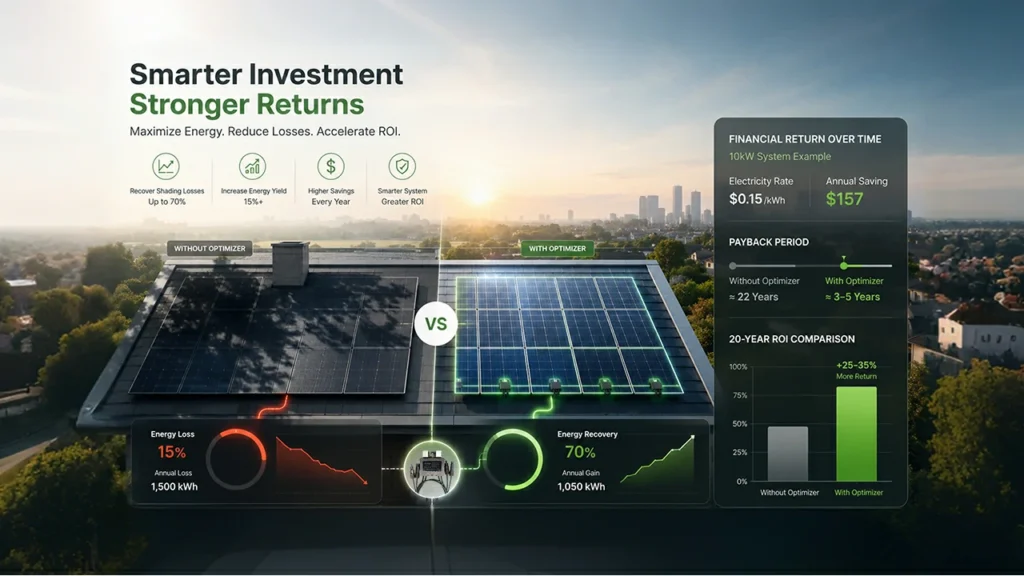
- A 10kW system with 15% annual shading loss generates approximately 1,500 kWh less per year than its nameplate potential.
- At $0.15/kWh average electricity rate, that’s $225/year in lost generation.
- A solar power optimizer recovering 70% of that shading loss saves approximately $157/year.
- At a system cost premium of $3,500 for optimizers on a 10kW system, payback period ≈ 22 years without optimizer benefit. With 70% shading loss recovery, payback from energy alone ≈ 3–5 years in moderate shading conditions.
These figures vary significantly based on shading severity, local electricity rates, and the specific optimizer and inverter combination. In locations with high electricity rates (above $0.20/kWh) or significant shading, optimizer ROI can be compelling even for relatively mild shading.
| ✔ Beyond energy ROI, solar power optimizers provide NEC 690.12 compliance at no additional hardware cost (for systems where compliance is mandatory). The alternative — a separate rapid shutdown device — adds cost without any energy or monitoring benefit. |
How to Choose a Solar Power Optimizer
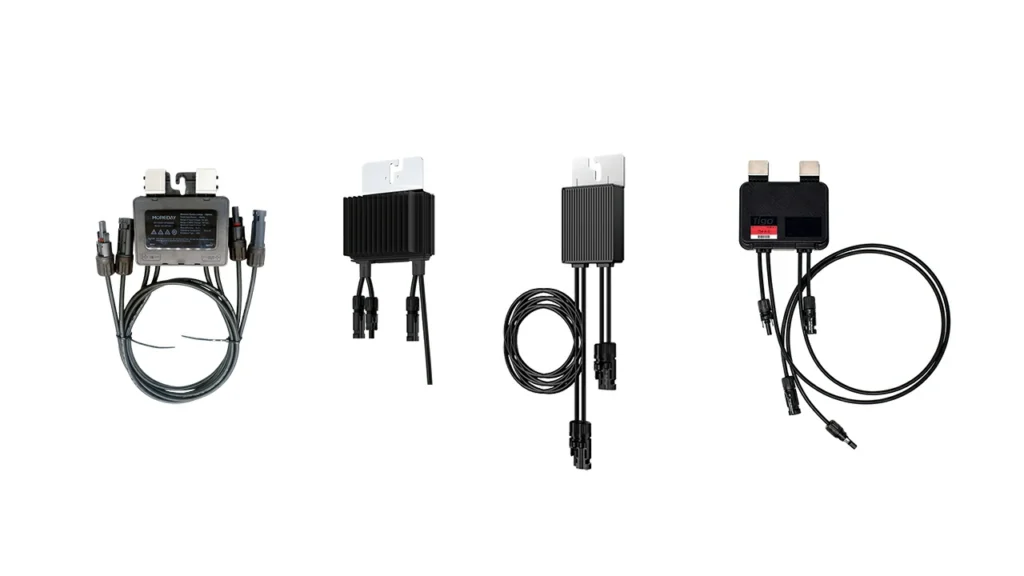
Not all solar power optimizers are equivalent. Here are the key selection criteria:
Wattage Rating
The optimizer’s wattage rating must match or exceed the Pmax of the panel it will be paired with. Most residential panels are 350W–500W; select an optimizer with at least 10% headroom above panel Pmax to account for temperature variation.
Input Voltage Range
The optimizer’s maximum input voltage must accommodate the panel’s Voc under cold-temperature conditions. Check the temperature-corrected Voc for your specific panel model and location, then verify it falls within the optimizer’s specified input range.
Output Voltage Range
The optimizer’s output voltage range must be compatible with your string inverter’s MPPT voltage window. This is why system certification matters: the optimizer and inverter must be matched by the manufacturer.
Efficiency
High-quality solar power optimizers achieve weighted efficiencies of 98.5–99.5%. Lower-efficiency optimizers introduce losses that can offset some of the gains from MPPT optimization. Always check the Weighted Efficiency specification in the datasheet.
IP Rating
Optimizers are mounted on the back of panels, exposed to weather. Minimum IP65 is required; IP68 is recommended for systems in wet climates or with potential water pooling.
Certifications
For NEC 690.12 compliance in the US, the optimizer and inverter must be certified together as a rapid shutdown system. Verify both UL 1741 certification (or UL 3741 for PVHCS-compliant systems) and NEC 690.12 compliance documentation from the manufacturer.
Brand and System Compatibility
The major solar power optimizer manufacturers include SolarEdge (which requires its own dedicated inverter), Tigo Energy (compatible with multiple third-party inverters), and Huawei SmartPV. Each has different compatibility requirements, monitoring platform capabilities, and warranty terms. Verify compatibility before specifying equipment.
Conclusion
A solar power optimizer is much more than a rapid shutdown compliance device. It is a panel-level intelligence system that addresses the fundamental performance weakness of string inverter architectures — the series-current constraint that allows one shaded or degraded panel to reduce the output of an entire string.
By delivering independent MPPT tracking at each panel, a solar power optimizer recovers 10–40% of the energy that would otherwise be lost to shading and mismatch. It enables panel-level monitoring that catches problems early. It eliminates hot spot risk. And it provides built-in NEC 690.12 rapid shutdown compliance in a single integrated solution — without requiring a separate RSD device.
For any residential or commercial installation with shading, multiple roof orientations, or systems located in jurisdictions where rapid shutdown is mandated, a solar power optimizer system represents a compelling investment with payback periods measured in years, not decades.
Related Reading: