
Energy Storage
One of the most common questions buyers ask is simple:
What can a Portable Power Station Actually Power?
The answer depends on two key factors—capacity (Wh/kWh) and output power (W). Understanding how these affect real-world usage is essential before choosing the right system.
If you’re new to the topic, start here:
What Is a Portable Power Station and How Does It Work?
How to Calculate What You Can Power
Before looking at examples, it’s important to understand the basic formula:
Runtime (hours) = Battery capacity (Wh) ÷ Device power (W)
Example:
- 1000Wh power station + 100W device = ~10 hours
In real use, efficiency losses (usually 10–15%) should be considered.
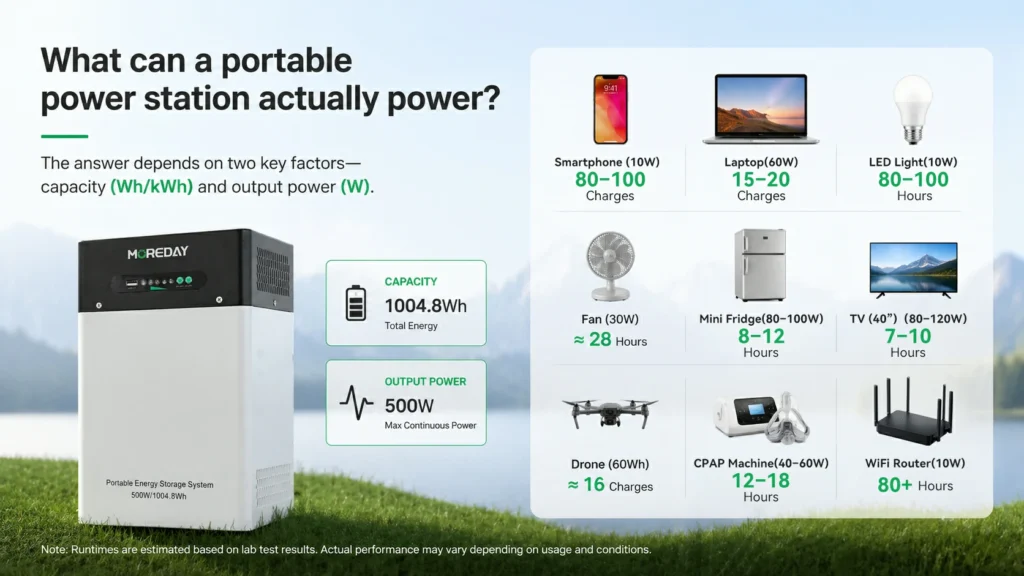
What Can a 1kWh Portable Power Station Power?
A 1kWh (1000Wh) portable power station is ideal for light to moderate usage.
Typical Devices & Runtime
| Device | Power (W) | Runtime (Approx.) |
|---|---|---|
| Smartphone | 10W | 80–100 charges |
| Laptop | 60W | 15–20 charges |
| WiFi Router | 10W | 80+ hours |
| LED Light | 10W | 80–100 hours |
| Mini Fridge | 80–100W | 8–12 hours |
| TV (40”) | 80–120W | 7–10 hours |
| CPAP Machine | 40–60W | 12–18 hours |
👉 Best for:
- Camping
- Outdoor work
- Short-term backup
What Can a 2kWh Portable Power Station Power?
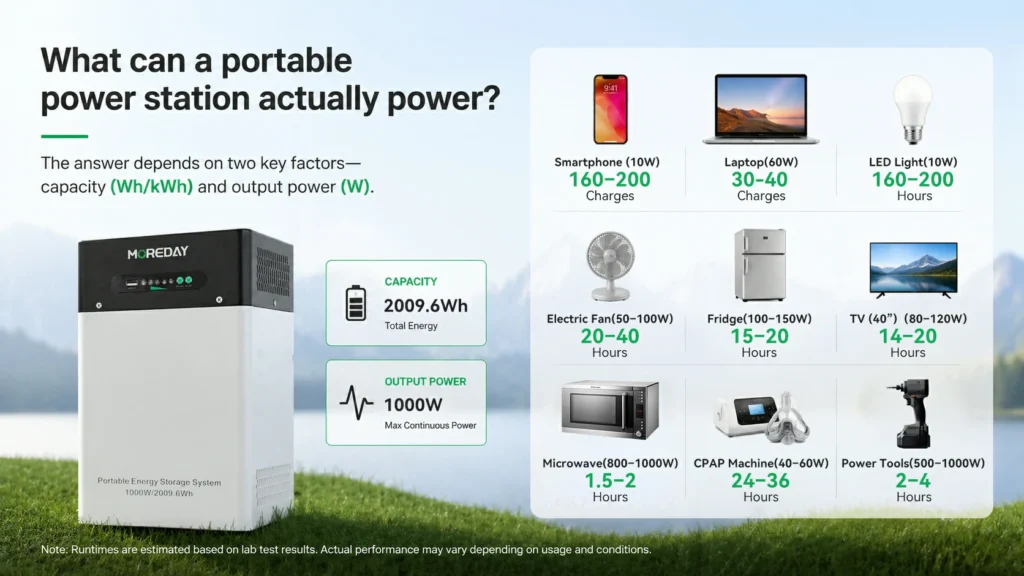
A 2kWh (2000Wh) system offers significantly longer runtime and supports more demanding devices.
Typical Devices & Runtime
| Device | Power (W) | Runtime (Approx.) |
|---|---|---|
| Laptop | 60W | 30–40 charges |
| Refrigerator | 100–150W | 15–20 hours |
| Microwave | 800–1000W | 1.5–2 hours |
| Electric Fan | 50–100W | 20–40 hours |
| Power Tools | 500–1000W | 2–4 hours |
👉 Best for:
- Emergency home backup
- Small appliances
- Longer off-grid use
What Can’t a Portable Power Station Power?
Not all devices are suitable.
Common Limitations
- High-power appliances (over inverter rating)
- Heating devices (e.g., electric heaters, kettles)
- Air conditioners (unless high-capacity system)
These devices require very high wattage and will quickly drain or overload smaller systems.
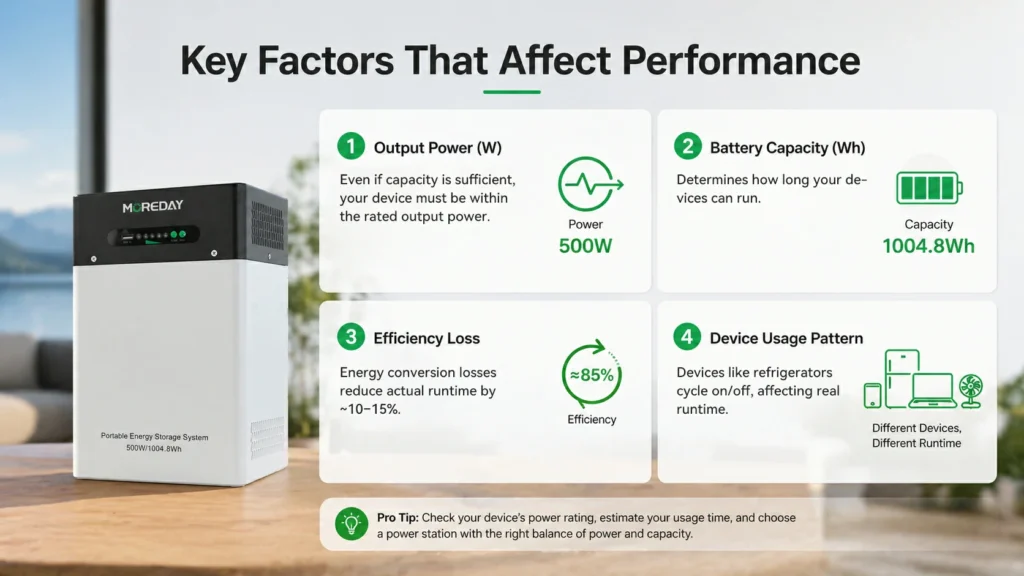
Key Factors That Affect Performance
1. Output Power (W)
Even if capacity is sufficient, your device must be within the rated output power.
2. Battery Capacity (Wh)
Determines how long your devices can run.
3. Efficiency Loss
Energy conversion losses reduce actual runtime by ~10–15%.
4. Device Usage Pattern
Devices like refrigerators cycle on/off, affecting real runtime.
Real-World Use Scenarios
Outdoor & Camping
- Phones, lights, cameras
- Small fridge or cooler
- Portable fans
👉 A 1kWh system is usually enough.
Emergency Home Backup
- Router + lights
- Refrigerator
- Medical devices
👉 A 2kWh system is more suitable.
Professional Use
- Tools
- Measurement equipment
- Field operations
👉 Requires higher output power and durability.
1kWh vs 2kWh: Which One Should You Choose?
| Scenario | Recommended |
|---|---|
| Light outdoor use | 1kWh |
| Weekend camping | 1kWh |
| Emergency backup | 2kWh |
| Small appliance support | 2kWh |
| Professional use | 2kWh |
👉 If you’re still unsure, check our full guide:
How to Choose the Best Portable Power Station
Common Mistakes When Estimating Power Needs
- Ignoring startup surge power
- Underestimating appliance wattage
- Not accounting for efficiency loss
- Choosing based on price alone
Understanding these factors helps avoid underpowered systems.
Conclusion
A portable power station can power a wide range of devices—from smartphones and laptops to refrigerators and small appliances—but the actual performance depends on capacity and output.
Choosing the right system means balancing your usage needs with realistic expectations of runtime and power limits.
👉 Explore our Portable Power Station solutions to find the right capacity for your application.
FAQ
What is a Portable Power Station?
A portable power station is a compact, battery-based energy storage system designed to provide electricity on demand. Unlike traditional fuel-powered generators, it stores electrical energy in rechargeable batteries and delivers clean, stable power through various output interfaces. Typically utilizing ternary lithium or lithium iron phosphate as the storage medium, these units feature individual capacities exceeding 100Wh.
👉 See detailed examples here:
What is a Portable Power Station?
What can I Power with a Portable Power Station?
From smartphones to refrigerators, portable power stations can support a wide range of devices depending on capacity and output.
👉 See detailed examples here:
What Can a Portable Power Station Power?
Is it Better than a Generator?
Yes, it is the superior choice—whether in terms of economy, environmental friendliness, or comfort.
👉 See detailed examples here:
Portable Power Station vs Generator: Which One Should You Choose?