
Distribution
Circuit breakers are essential components in electrical systems. Their main function is simple: to protect people, equipment, and wiring by automatically cutting off power when a fault occurs.
However, not all circuit breakers work in the same way or serve the same purpose.
Below is a clear overview of the most common types of circuit breakers, how they differ, and where they are typically used.
ACB (Air Circuit Breaker)
An Air Circuit Breaker (ACB) uses air as the medium to extinguish the arc when the circuit is interrupted. It is designed for high-current, low-voltage applications.
ACBs are mainly used in main distribution panels, industrial power systems, and large commercial buildings. They provide reliable protection against overloads and short circuits and are often installed as the main incoming breaker.
Key characteristics:
- Suitable for high current ratings
- Used in main power distribution
- Common in industrial and large commercial systems
MCB (Miniature Circuit Breaker)
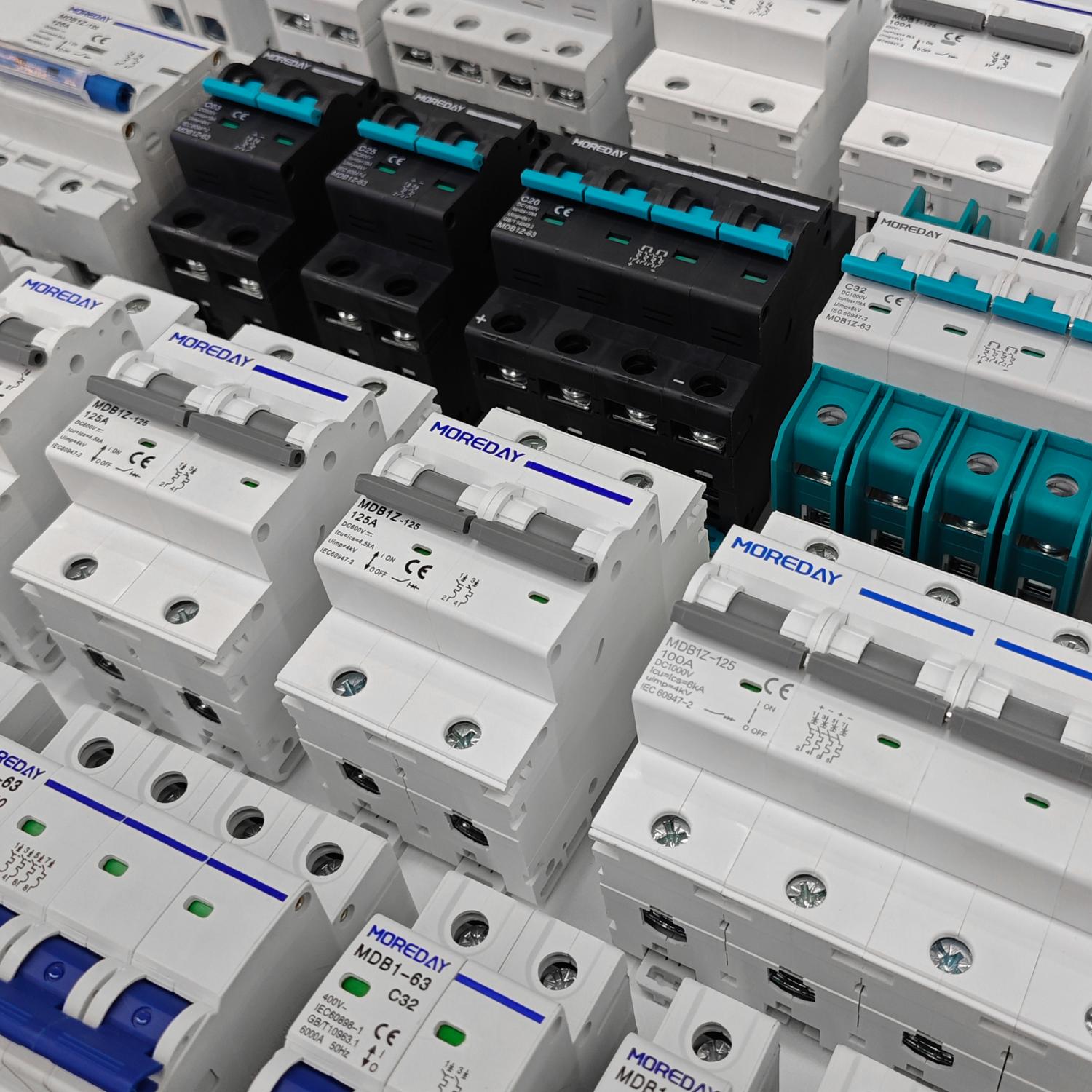
A Miniature Circuit Breaker (MCB) is the most widely used circuit breaker in residential and light commercial applications. It protects circuits from overloads and short circuits.
MCBs are compact, easy to install, and typically used for lighting circuits, socket outlets, and small appliances. Works even better when used in conjunction with an electrical distribution box.
Key characteristics:
- Small size and fast response
- Protects against overload and short circuit
- Common in homes and small buildings
MCCB (Molded Case Circuit Breaker)
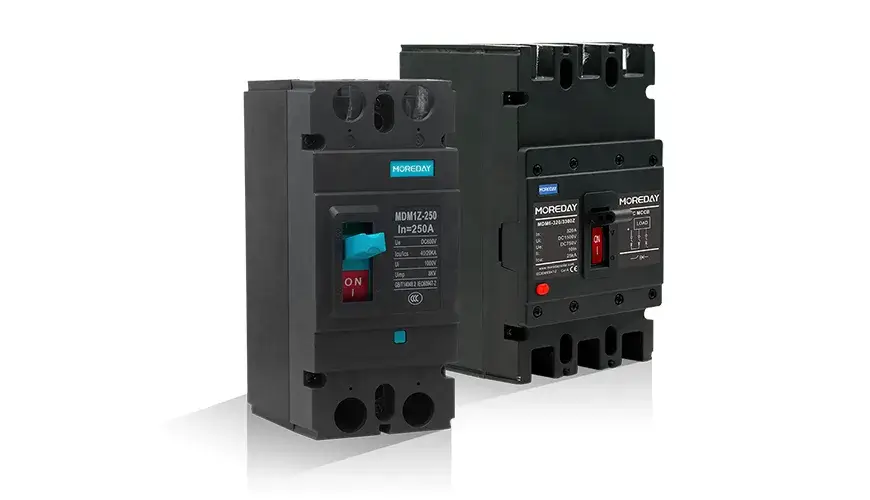
A Molded Case Circuit Breaker (MCCB) is similar in function to an MCB but designed for higher current levels. It offers adjustable trip settings, making it more flexible for different load conditions.
MCCBs are widely used in commercial buildings, factories, and motor control panels.
Key characteristics:
- Higher current capacity than MCB
- Adjustable protection settings
- Suitable for industrial and commercial use
RCCB (Residual Current Circuit Breaker)
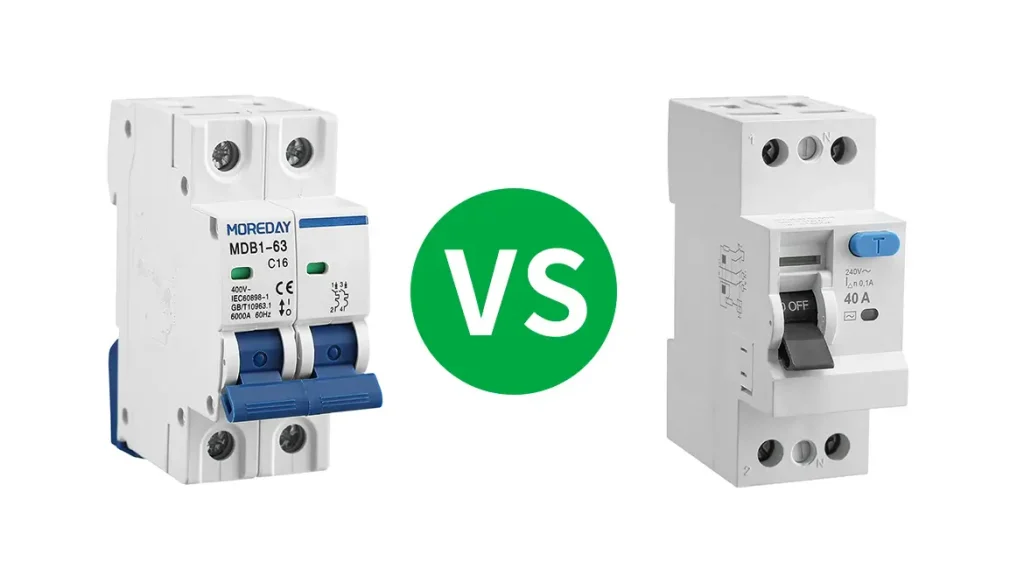
A Residual Current Circuit Breaker (RCCB) protects people from electric shock by detecting leakage current to earth. It does not provide protection against overload or short circuit.
RCCBs are usually installed together with MCBs or MCCBs to form a complete protection system.
Key characteristics:
- Detects earth leakage current
- Protects against electric shock
- Must be combined with overcurrent protection
RCBO (Residual Current Breaker with Overcurrent Protection)
An RCBO combines the functions of an MCB and an RCCB in a single device. It provides protection against overload, short circuit, and earth leakage.
RCBOs are commonly used where space is limited or where individual circuit protection is preferred, such as in modern residential installations.
Key characteristics:
- All-in-one protection
- Saves space in distribution boards
- Improves safety at circuit level
MPCB (Motor Protection Circuit Breaker)
A Motor Protection Circuit Breaker (MPCB) is specifically designed to protect electric motors. In addition to short-circuit protection, it can detect overloads caused by phase loss or mechanical blockage.
MPCBs are widely used in motor control centers (MCCs) and industrial automation systems.
Key characteristics:
- Designed for motor protection
- Detects overload, short circuit, and phase failure
- Common in industrial motor applications
Less Common Circuit Breaker Types
In addition to the breakers above, there are several more specialized types used in specific environments.
A VCB (Vacuum Circuit Breaker) uses a vacuum to extinguish the arc and is mainly applied in medium-voltage systems, such as substations and utility networks. It offers long service life and low maintenance.
Other examples include SF₆ circuit breakers, which use sulfur hexafluoride gas for arc extinction, and oil circuit breakers, which are now rarely used but were common in older power systems.
These breakers are typically found in power transmission and distribution, rather than residential or standard commercial installations.
Common Circuit Breakers Comparison Table
| Type | Full Name | Main Function | Current Level | Typical Applications | Key Difference |
| MCB | Miniature Circuit Breaker | Overload & short-circuit protection | Low | Homes, small offices, lighting & sockets | Small, simple, most common residential breaker |
| MCCB | Molded Case Circuit Breaker | Overload & short-circuit protection | Medium to high | Commercial buildings, factories, distribution panels | Higher current and adjustable settings |
| ACB | Air Circuit Breaker | Main power protection & isolation | High | Main distribution boards, industrial plants | Used as main incoming breaker |
| RCCB | Residual Current Circuit Breaker | Earth leakage (electric shock) protection | Depends on system | Residential & commercial systems | No overload or short-circuit protection |
| RCBO | Residual Current Breaker with Overcurrent Protection | Overload, short circuit & earth leakage | Low to medium | Modern homes, critical circuits | Combines MCB + RCCB in one device |
| MPCB | Motor Protection Circuit Breaker | Motor overload & short-circuit protection | Motor-rated | Motors, pumps, compressors | Designed specifically for motors |
| VCB | Vacuum Circuit Breaker | Medium-voltage fault protection | Medium voltage | Substations, utility & industrial MV systems | Uses vacuum for arc extinction |
Conclusion
Each type of circuit breaker serves a specific role in electrical protection.
From simple MCBs in homes to ACBs and VCBs in industrial and power systems, choosing the right breaker depends on voltage level, current rating, application, and safety requirements.
Understanding these differences helps ensure safer, more reliable electrical systems—and makes selecting the right protection device much easier.