
Solar
A solar photovoltaic (PV) system is a power generation system that converts sunlight directly into electricity. It is widely used in residential, commercial, and industrial applications to reduce reliance on traditional grid power and improve energy sustainability.
To truly understand how a solar PV system works, it’s important to look beyond the solar panels themselves and understand the complete system structure, including how electricity is generated, protected, and delivered.
What Does “PV” Mean?
PV stands for photovoltaic, a process in which certain materials generate electric current when exposed to sunlight.
When sunlight hits a solar cell:
- Photons transfer energy to electrons
- Electrons begin to move
- This movement creates direct current (DC) electricity
This DC power is the starting point of every solar PV system.
Main Components of a Solar PV System
A complete solar PV system is made up of several interconnected components, each serving a specific function.
Solar PV Modules (Panels)
Solar modules are the most visible part of the system. They:
- Capture sunlight
- Convert solar energy into DC electricity
- Are connected in series and/or parallel to form PV strings
The electrical output of a PV module depends on:
- Sunlight intensity
- Module efficiency
- Temperature conditions
PV Strings and DC Cabling
Multiple PV modules are connected together to form a string.
These strings:
- Increase system voltage
- Deliver DC power from the array to downstream equipment
DC cables used in PV systems must be:
- Rated for high DC voltage
- Resistant to UV, heat, and environmental exposure
- Properly sized to minimize power loss and overheating
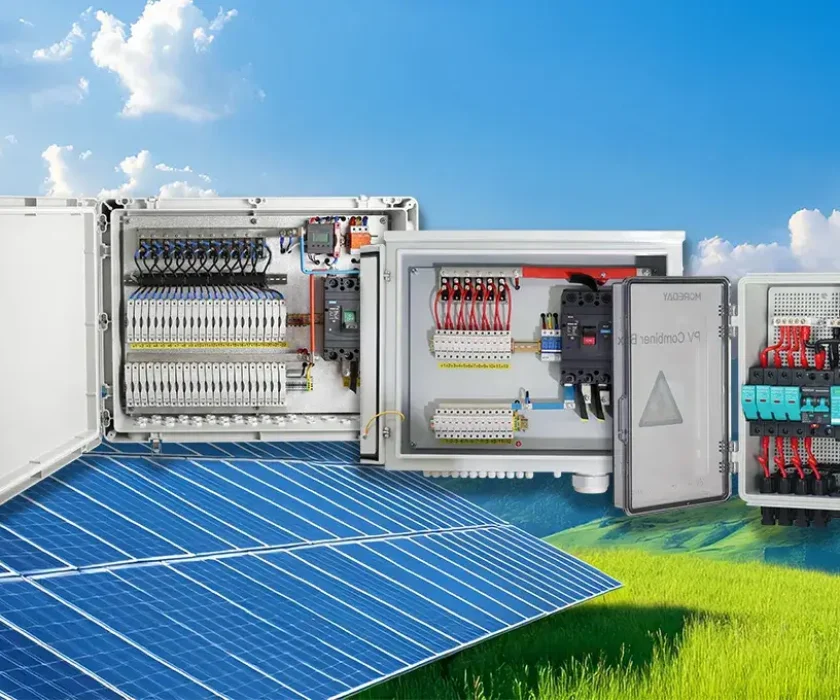
DC Combiner Box (Optional but Common)
In systems with multiple PV strings, a DC combiner box is typically used.
Its role is to:
- Combine several PV strings into a single DC output
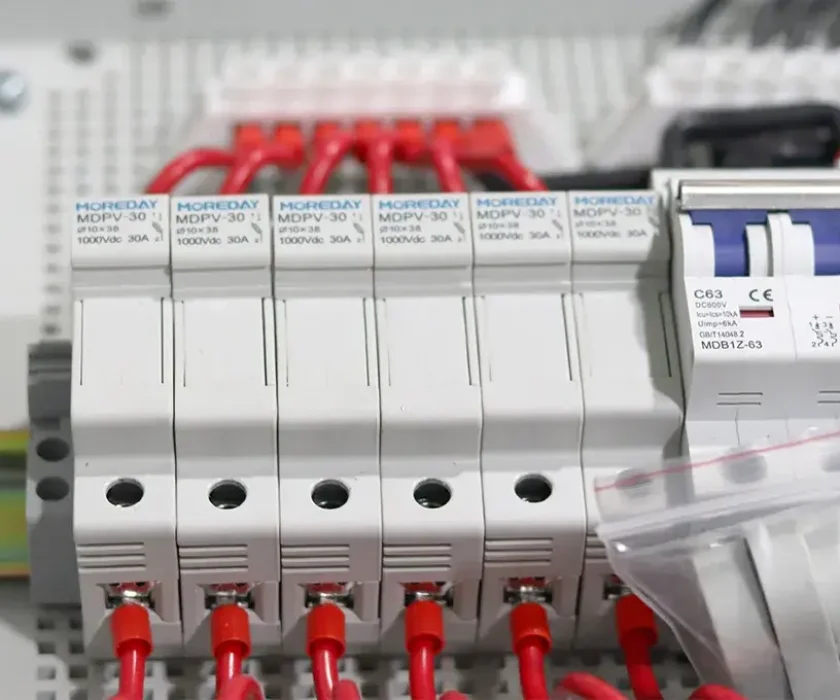
- Provide overcurrent protection (such as DC fuses)
- Integrate isolation and surge protection devices
Combiner boxes help improve:
- Electrical safety
- System organization
- Maintenance convenience
👉 This component plays a critical role in PV protection and will be explained in detail in dedicated articles.
Inverter
The inverter is the bridge between the DC side and the AC side of the system.
Its main functions are:
- Convert DC electricity into alternating current (AC)
- Synchronize output with the grid (for grid-connected systems)
- Monitor system performance and faults
Without an inverter, DC power generated by PV modules cannot be used by standard electrical equipment.
AC Distribution and Protection Equipment
After conversion to AC power, electricity flows through:
- AC distribution boxes
- Circuit breakers
- Protection and disconnect devices
These components ensure:
- Safe power distribution
- Proper isolation during maintenance
- Compliance with electrical standards
Utility Grid or Electrical Loads
Depending on the system type, the generated electricity may:
- Feed directly into the utility grid
- Supply on-site electrical loads
- Be managed by additional system components in more complex setups
How a Solar PV System Works (Step by Step)
A simplified working process looks like this:
- Sunlight hits the PV modules
- PV modules generate DC electricity
- DC power flows through strings and DC protection devices
- DC electricity is converted to AC by the inverter
- AC power is distributed to loads or the grid
Throughout this process, electrical protection devices play a key role in ensuring system safety and reliability.
AC vs DC in a Solar PV System
One important concept in PV systems is the distinction between DC and AC:
- PV modules generate DC power
- Homes and grids use AC power
- The inverter connects these two worlds
Because DC behaves differently from AC, PV systems require:
- Dedicated DC-rated protection devices
- Proper isolation and surge protection
- Careful system design
👉 This topic will be covered in detail in a separate article.
Different Types of Solar PV Systems
Solar PV systems are generally categorized into:
- Grid-connected systems
- Off-grid systems
- Hybrid systems
While their core components are similar, their system structure and protection requirements differ.
👉 A full comparison is available in a dedicated guide.
Why Electrical Protection Is Essential in PV Systems
Solar PV systems operate at high DC voltages and are often installed outdoors.
Without proper protection, risks may include:
- Overcurrent and short circuits
- Electrical arcing
- Lightning and surge damage
- Fire hazards
This is why components such as:
- DC fuses
- DC isolator switches
- Surge protection devices
are fundamental parts of a well-designed PV system.
Summary
A solar PV system is much more than just solar panels.
It is a carefully designed electrical system that includes:
- Energy generation
- Power conversion
- Electrical distribution
- Protection and safety mechanisms
Understanding the full system structure is the first step toward designing, installing, or selecting reliable PV equipment.
As you explore deeper topics such as DC protection, combiner boxes, and system design, each component will make more sense within the overall PV system framework.