
Distribution
Electrical cabinets are the nerve centers of modern power distribution and control systems. From solar combiner boxes and DC distribution panels to industrial control cabinets and energy storage systems, these enclosures contain high-value electrical components—and represent a high fire risk.
In recent years, aerosol fire suppression systems have become an increasingly popular solution for protecting electrical cabinets. This article explains where aerosol fire suppression is used, why it is especially suitable for enclosed electrical spaces, and what benefits it offers compared with traditional fire protection methods.
Why Electrical Cabinets Are High-Risk Fire Zones
Electrical cabinets concentrate multiple fire risk factors in a very limited space:
- High current and voltage levels
- Dense wiring and terminal connections
- Heat accumulation in enclosed enclosures
- Potential faults such as short circuits, loose terminals, or insulation aging
Once a fire starts inside a cabinet, it can escalate rapidly. Because cabinets are usually closed and unattended, early detection and suppression are critical. This is exactly where aerosol fire suppression excels.
Typical Applications of Aerosol Fire Suppression in Electrical Cabinets
Aerosol fire suppression systems are widely used across power, renewable energy, and industrial automation sectors. Common applications include:
Solar Combiner Boxes and PV DC Distribution Boxes
Solar combiner boxes aggregate multiple PV strings and operate under continuous DC load. DC arcs, overheating terminals, or component failures can easily trigger fires.
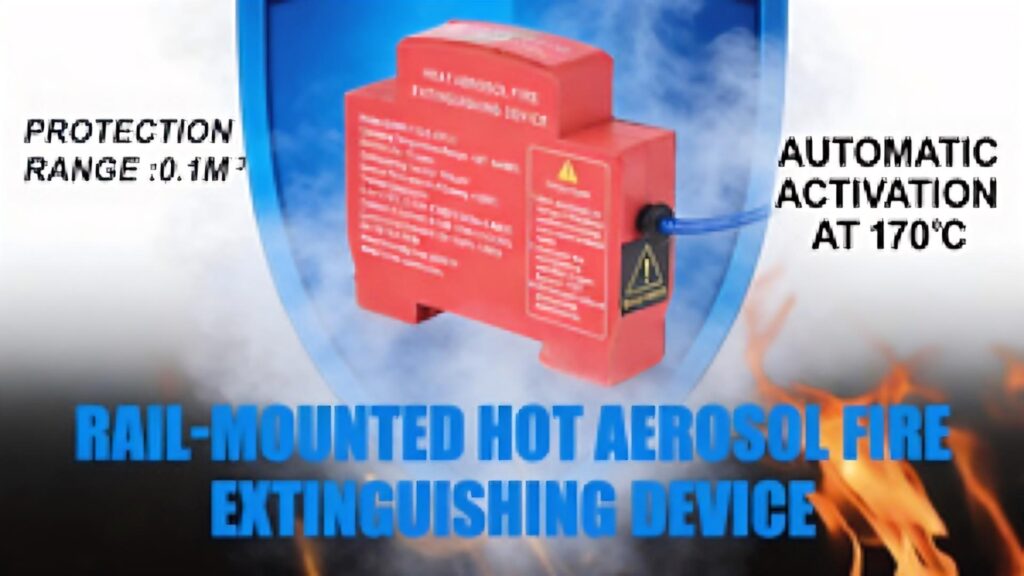
Compact aerosol fire suppressors can be installed directly inside the combiner box, providing automatic, localized fire protection without affecting normal system operation.
Energy Storage System (ESS) Cabinets
Battery energy storage systems contain lithium batteries, BMS units, DC breakers, and busbars—all within enclosed cabinets.
Aerosol systems offer fast suppression of early-stage electrical fires, helping to:
- Limit fire spread inside battery cabinets
- Reduce damage to critical components
- Improve overall system safety
Low-Voltage and Medium-Voltage Switchgear
In power distribution panels and switchgear cabinets, aerosol fire suppression provides an additional layer of internal protection, especially in remote or unmanned substations.
Industrial Control Panels
PLC cabinets, automation panels, and control boxes often operate continuously in harsh environments. Aerosol systems protect sensitive electronics without leaving residue or requiring complex piping.
How Aerosol Fire Suppression Works Inside Cabinets
Unlike water-based or gas-based systems, aerosol fire suppression works by interrupting the chemical chain reaction of fire.
When activated by heat or flame:
- The aerosol generator releases ultra-fine solid particles
- These particles disperse rapidly throughout the cabinet
- Free radicals in the flame are neutralized
- Combustion is stopped at the molecular level
Because the aerosol particles remain suspended for several seconds, they are especially effective in enclosed spaces like electrical cabinets.
Key Benefits of Aerosol Fire Suppression for Electrical Cabinets
Compact and Space-Saving
Electrical cabinets have limited internal space. Aerosol fire suppression units are small and self-contained, making them ideal for retrofitting or integration during cabinet assembly.
No Piping or External Cylinders
Aerosol systems do not require complex piping, pressure vessels, or large gas cylinders. This simplifies installation and reduces maintenance requirements.
Safe for Electrical Equipment
Aerosol agents are non-conductive and non-corrosive. After discharge, they do not damage electronic components or insulation materials when properly designed and certified.
Fast Response and Localized Protection
Because the unit is installed inside the cabinet, suppression occurs at the fire source. This minimizes thermal damage and prevents fire spread to adjacent equipment.
Low Maintenance
Most aerosol fire suppression devices are maintenance-free for many years, making them suitable for unmanned or hard-to-access installations.
Aerosol Fire Suppression vs Traditional Fire Protection Methods
Compared with traditional solutions such as portable extinguishers or centralized gas systems:
- Aerosol systems activate automatically
- No human intervention is required
- No water damage risk
- Lower installation cost for small enclosures
This makes aerosol fire suppression particularly attractive for distributed electrical cabinets in solar plants, factories, and infrastructure projects.
Design and Installation Considerations
When selecting an aerosol fire suppression system for electrical cabinets, consider:
- Cabinet internal volume
- Type of electrical equipment inside
- Operating temperature range
- Compliance with relevant fire safety standards
Proper sizing and placement ensure effective suppression without unnecessary discharge.
Conclusion
Electrical cabinets are critical assets—and potential fire hazards—in modern power and automation systems. Aerosol fire suppression systems provide a compact, efficient, and reliable solution for protecting enclosed electrical spaces, especially where traditional fire suppression methods are impractical.
For solar combiner boxes, energy storage cabinets, and control panels, aerosol fire suppression is becoming an essential part of modern electrical safety design.