
Energy Storage
Choosing the best portable power station is not about picking the biggest battery or the highest wattage—it’s about matching the right system to your actual needs.
Whether you’re planning for outdoor use, backup power, or professional applications, understanding how portable power stations work and what specifications really matter can help you avoid costly mistakes.
If you’re new to this topic, you may also want to start with our guide:
What Is a Portable Power Station and How Does It Work?
What Makes a Portable Power Station “The Best”?
There is no single “best” portable power station for everyone. The right choice depends on three key factors:
- Energy capacity (Wh / kWh): That determines its battery life.
- Output power (W): It can determine his output power.
- Application scenario: How will it be used, and where?
A system that works perfectly for camping may not be suitable for home backup or job sites. The best portable power station is simply the one that meets your real-world requirements efficiently and reliably.
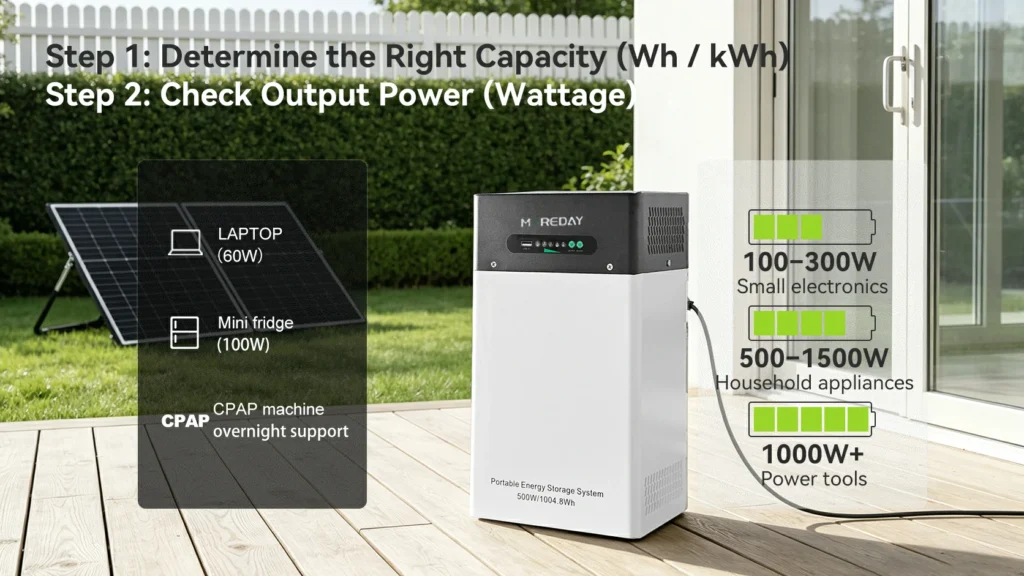
Step 1: Determine the Right Capacity (Wh / kWh)
Capacity defines how long your power station can run your devices.
Typical Capacity Options
- Around 1kWh
Suitable for light outdoor use, charging electronics, and short-term backup - Around 2kWh
Ideal for longer runtime, powering small appliances, and emergency home backup
Quick Example
- Laptop (60W): ~15–20 charges (1kWh)
- Mini fridge (100W): ~8–10 hours
- CPAP machine: overnight support
👉 If you’re unsure, check our detailed guide:
What Can a Portable Power Station Power?
Step 2: Check Output Power (Wattage)
Many buyers focus only on capacity—but output power is equally important.
Output power determines what devices you can actually run.
Key Points
- Small electronics: 100–300W
- Household appliances: 500–1500W
- Power tools: 1000W+
If the output rating is too low, your device won’t run—even if the battery is full.
Step 3: Choose the Right Battery Type
Battery chemistry directly affects safety, lifespan, and performance.
Common Types
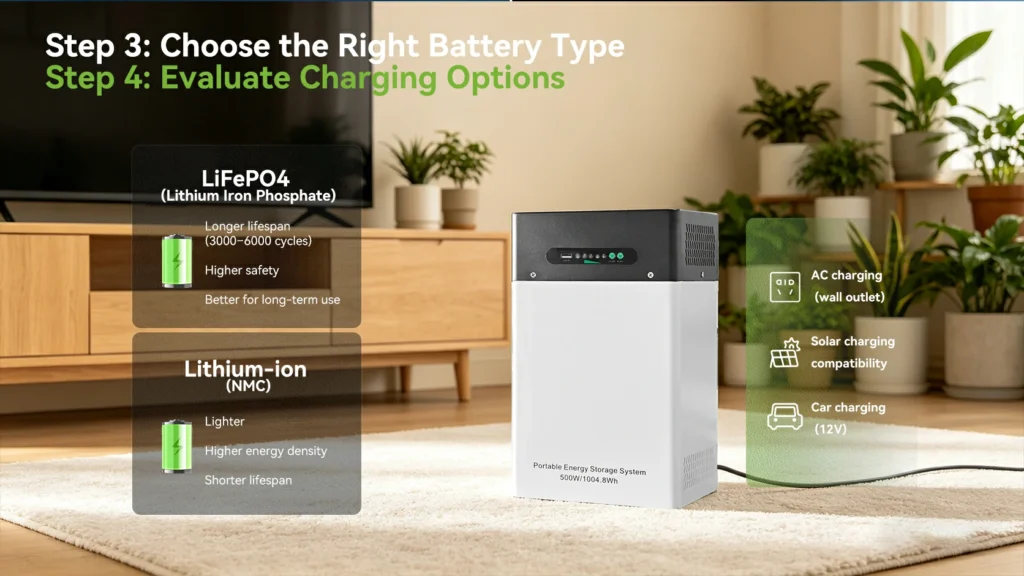
- LiFePO4 (Lithium Iron Phosphate)
- Longer lifespan (3000–6000 cycles)
- Higher safety
- Better for long-term use
- Lithium-ion (NMC)
- Lighter
- Higher energy density
- Shorter lifespan
For most users, especially for backup and frequent use, LiFePO4 is the better choice.
Step 4: Evaluate Charging Options
Flexibility in charging is essential.
Look for:
- AC charging (wall outlet)
- Solar charging compatibility
- Car charging (12V)
Solar charging is particularly useful for off-grid and emergency scenarios, turning your system into a clean energy solution.
Step 5: Check Ports and Expandability
Different use cases require different output options.
Common Outputs
- AC outlets
- USB-A / USB-C
- DC outputs
Also consider whether the system supports:
- Expandable battery capacity: Adding components and connections to the device to enhance performance and battery life.
- Parallel connection: Connect multiple devices to increase capacity and extend battery life.
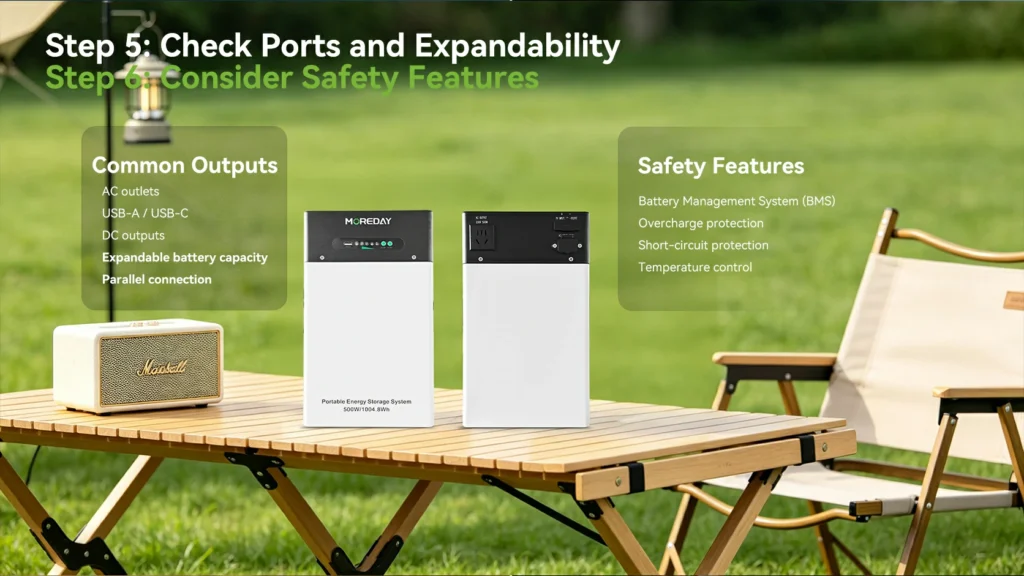
Step 6: Consider Safety Features
Safety should never be overlooked.
A reliable portable power station should include:
- Battery Management System (BMS)
- Overcharge protection
- Short-circuit protection
- Temperature control
👉 Learn more here:
Are Portable Power Stations Safe?
Step 7: Match the System to Your Application
This is where most buying decisions go wrong.
Outdoor & Camping
Focus on portability, moderate capacity, and solar charging
Emergency Backup
Prioritize higher capacity and stable output
Professional Use
Look for durability, high output, and multiple ports
Common Mistakes to Avoid
Many buyers choose the wrong system due to these mistakes:
- Choosing based on capacity only
- Ignoring output power limits
- Overlooking battery type
- Not considering real usage scenarios
Avoiding these errors can save both money and frustration.
Portable Power Station vs Generator: Which Is Better?
Portable power stations and generators serve similar purposes but differ significantly:
- Portable power stations: quiet, clean, maintenance-free
- Generators: high power, but noisy and fuel-dependent
👉 For a detailed comparison, see:
Portable Power Station vs Generator: Which One Should You Choose?
Conclusion
Choosing the best portable power station comes down to understanding your needs and matching them with the right specifications.
Instead of focusing on a single “best” model, evaluate capacity, output, battery type, and real-world applications to make a smart decision.
Whether you’re sourcing for projects, resale, or personal use, selecting the right system ensures better performance, reliability, and long-term value.
👉 Explore our best portable power station solutions to find the right fit for your application.
FAQ
What is a Portable Power Station?
A portable power station is a compact, battery-based energy storage system designed to provide electricity on demand. Unlike traditional fuel-powered generators, it stores electrical energy in rechargeable batteries and delivers clean, stable power through various output interfaces. Typically utilizing ternary lithium or lithium iron phosphate as the storage medium, these units feature individual capacities exceeding 100Wh.
👉 See detailed examples here:
What is a Portable Power Station?
What can I Power with a Portable Power Station?
From smartphones to refrigerators, portable power stations can support a wide range of devices depending on capacity and output.
👉 See detailed examples here:
What Can a Portable Power Station Power?
Is it Better than a Generator?
Yes, it is the superior choice—whether in terms of economy, environmental friendliness, or comfort.
👉 See detailed examples here:
Portable Power Station vs Generator: Which One Should You Choose?